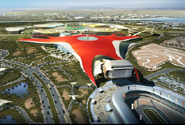













Why Low-Density Island Living Is Becoming Abu Dhabi’s Next Big Lifestyle Trend
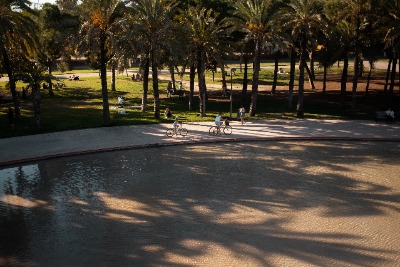
For most of the last two decades, luxury in Abu Dhabi meant height. A corner unit on a high floor. A skyline view. Proximity to whichever tower happened to be tallest that year. That equation is quietly being rewritten. A growing number of buyers are trading vertical prestige for horizontal space: private gardens instead of balconies, walking trails instead of elevator lobbies, tidal creeks instead of a marina glimpsed from the fortieth floor.
Nowhere is that shift more visible than in the market for luxury villas in Abu Dhabi, where low-density, nature-integrated communities have moved from niche preference to a defined and fast-growing category in their own right. Jubail Island, positioned between Yas Island and Saadiyat Island, has become one of the clearest expressions of where that category is heading.
The numbers behind this shift are worth pausing on. According to data from the Abu Dhabi Real Estate Centre (ADREC), occupied residential units in the emirate grew by 6.6 percent between 2022 and 2025, while supply over the same period grew by only 2.8 percent. That gap is most pronounced in villa-grade housing, where families and high-income buyers are competing for a limited pool of well-planned, low-density stock rather than the high-rise apartment inventory that continues to expand across the city.
It helps that the broader fundamentals are strong. Abu Dhabi has recorded population growth of around 7.5 percent alongside non-oil GDP growth of 7.6 percent, and 2025 alone saw 56 new real estate projects launched across the emirate. But supply growth hasn't been evenly distributed. It's concentrated in mid-rise and high-rise product, which means the villa segment, particularly in genuinely low-density settings, keeps getting scarcer even as the city itself keeps expanding.
There's also a behavioral piece to the story. Since the pandemic, the priorities of wealthy families shopping for a home have changed in a fairly consistent way across markets: more private outdoor space, better air and acoustic separation from neighbors, and closer proximity to nature rather than to nightlife or retail. That shift has directly benefited villa communities on Saadiyat and Yas Island, and it's the same appetite now pulling buyers toward newer, more deliberately low-density developments further along the coastline.
It's worth noting that this isn't a single developer's marketing angle. It's a pattern across several of the capital's newest addresses. Saadiyat Island's continued appeal rests partly on its own low-density planning alongside its cultural institutions. Hudayriyat Island, one of the most active submarkets in Abu Dhabi in early 2026, has been built around the same nature-first, lower-density brief, offering a secluded feel while staying close enough to the city center for genuine day-to-day connectivity.
Jubail Island sits at the more deliberate end of that spectrum. Rather than treating low density as a lifestyle amenity layered on top of a conventional masterplan, its entire structure was built around the constraint from the outset, with a fixed proportion of the island left untouched.
The scale of that constraint is what sets Jubail Island apart. The development spans roughly 4,000 hectares (around 40 million square metres) of protected mangrove landscape, yet only about 20 percent of the island is actually built on. The remaining land, including more than 1.2 million square metres of parks and open space, is preserved as mangrove forest, tidal waterways, and green reserve threaded through the residential areas rather than sitting apart from them.
The AED 15 billion masterplan, developed and managed by LEAD Development on behalf of Jubail Island Investment Company (JIIC), has more than 30 kilometres of waterfront and sits just 15 minutes from Abu Dhabi International Airport. As of early 2026, more than 1,000 homes have already been handed over to residents, marking the project's shift from a construction site into a functioning, lived-in community. Anchoring the natural side of the island is the Jubail Mangrove Park, a dedicated conservation and education space with floating boardwalks that let residents and visitors move through the mangroves without disturbing them.
Jubail Island is organised into six residential villages, each connected by pedestrian and cycling routes rather than main roads, and each with a distinct character:
Because the villages share one connected island rather than functioning as isolated compounds, residents can cycle between a morning coffee in Souk Al Jubail and an evening walk through Ain Al Maha's mangrove trails without leaving the community.
The practical case for low-density living only holds up if daily life is still convenient, and this is where Jubail Island's positioning matters. Sitting between Yas Island and Saadiyat Island, and roughly a quarter of an hour from the airport, residents are close to the capital's cultural and entertainment anchors without living inside them. On-island, the amenity list reads like that of a self-contained town rather than a single residential compound: schools, nurseries, a beach club, a business centre, a sports centre, supermarkets, specialised clinics, a yacht club, and community pools, all built around the same walking and cycling network that ties the six villages together.
That combination, real conservation commitments alongside genuine day-to-day infrastructure, is what distinguishes this wave of low-density island communities from earlier suburban villa developments, which often traded convenience for space rather than offering both.
The supply-demand gap that ADREC's data points to isn't likely to close quickly. Villa-grade land in genuinely low-density settings is, by definition, limited, and developments like Jubail Island have built that scarcity into their masterplans permanently rather than as a temporary phase before further construction. For buyers who've been watching Saadiyat and Yas Island villas become harder to secure, that scarcity is precisely the appeal.
What started as a lifestyle preference, more space, more nature, more separation from density, has become a structural feature of how the capital's premium residential market is developing. Jubail Island, with its six low-density villages set among protected mangroves, is currently the clearest illustration of where that trend leads. Buyers exploring the current collection of villas on Jubail Island are, in effect, looking at what the next phase of luxury living in Abu Dhabi is expected to look like.
We accept Guest Posts 
|
|

 New
New Review
 Abu Dhabi International Airport - 41°F